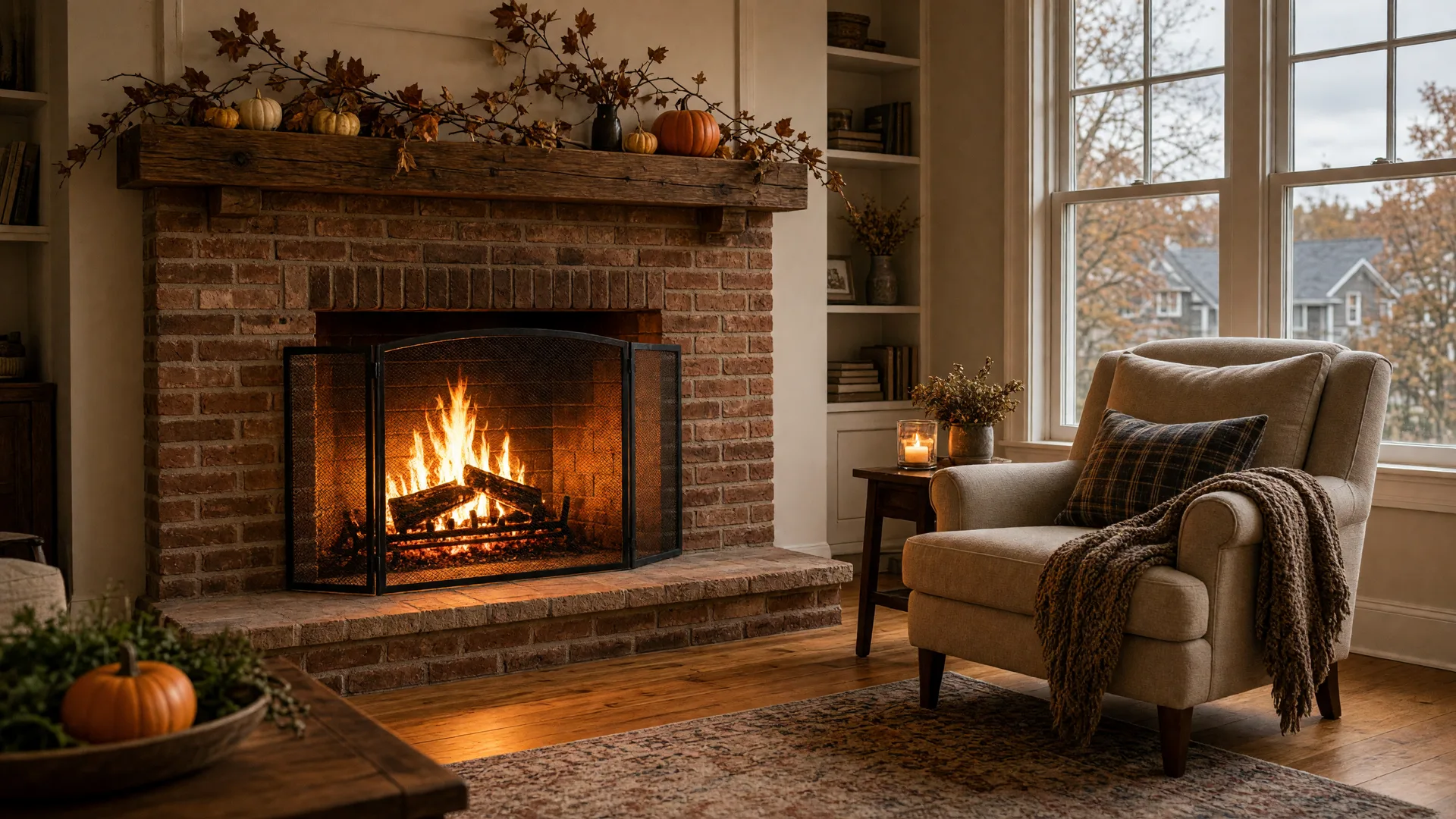
November is the month to get a wood fireplace ready before the first cold snap, and in Delran the first fires usually happen around Thanksgiving. A chimney that has sat unused since last spring can hold creosote, animal nests, or cracked flue tiles, and all three are easy to prevent with a little planning. This guide covers how often chimneys need attention, what a sweep costs in New Jersey, how to pick safe firewood, what to check yourself, gas fireplace care, and the warning signs that mean it is time to call a professional. It is the seasonal follow-up to the fall home maintenance checklist and the next chapter after the winter home maintenance guide for the rest of your cold-season prep.
Why Is Late Fall the Right Time to Deal With Your Chimney in Delran?
South Jersey winters are a freeze-thaw cycle, and a masonry chimney takes the brunt of it. Rain soaks into brick and mortar, then freezes, expands, and widens every hairline crack. By spring, a chimney that looked fine in October can have spalling brick, a damaged crown, or water working its way down into the firebox. The homes in Delran with masonry fireplaces, the brick ranches and split-levels from the 1950s through the 1970s, the colonials in Tenby Chase, and the older houses in Bridgeboro, all face the same weather.
The other reason to act now is the calendar. Once the first hard freeze hits and no-heat calls start, chimney sweeps, plumbers, and HVAC techs fill up fast. Booking a sweep in the first half of November means you are ready for the first fire on a cold night, not waiting for an opening. The Delran contractor recommendations page has vetted local names for chimney and hearth work to start with.
How Often Should a Fireplace and Chimney Be Inspected in New Jersey?
The national standard, NFPA 211, calls for every chimney to be inspected at least once a year, regardless of whether you burn wood, gas, or oil. Inspections come in levels. A Level 1 is the routine annual check of the readily accessible parts of the chimney and firebox. A Level 2 adds a video camera scan of the full flue and is what a professional runs when you buy a home with a fireplace, after a chimney fire, or after a flue-damaging event like a lightning strike. A Level 3 digs into concealed areas when a problem is suspected.
Cleaning is separate from inspection and condition-based. The flue should be swept when soot or creosote buildup reaches about one-eighth of an inch, roughly the thickness of two stacked dimes. A chimney that burns wood heavily for most of the winter usually needs a yearly sweep. A light user, someone who builds a fire a few weekends a season, can often go a year or two between cleanings as long as the annual inspection is done and the flue is clear.
How Much Does a Chimney Sweep Cost in New Jersey?
A standard sweep with a Level 1 inspection typically runs about $150 to $400 in New Jersey, with most homeowners landing near $250, a bit above the national average because labor runs higher in the Northeast. Adding a camera scan moves you to a Level 2 inspection at roughly $250 to $500. A standalone inspection without a sweep runs about $150 to $500 depending on the level. Repairs, new caps, and animal removal are quoted separately, so get a written estimate before any work begins.
Price alone should not pick your sweep. Ask whether the company is insured, whether the technician holds a Chimney Safety Institute of America (CSIA) certification, and what exactly the fee covers: sweeping, the annual inspection, and a report in writing. A sweep that finds a problem and documents it with photos is doing the job right. If you bought your Delran home within the last year or two and have never had the chimney looked at, this is the season to book that first inspection, the home inspection guide explains what a general inspector will and will not cover.
What Is Creosote and Why Is It the Biggest Chimney Fire Risk?
Creosote is the flammable, tar-like byproduct of wood combustion. When smoke from a fire cools as it rises through the flue, water vapor and unburned particles condense onto the chimney walls, and that coating is exactly what a chimney fire burns. Creosote builds in stages, from a light dusting to a shiny, glazed layer that is the hardest to remove and the most dangerous to burn. A chimney fire is loud, often described as a low roaring sound, and it can crack flue tiles and damage the liner even when it does not spread to the house.
The way to keep creosote from building up is to burn the right wood the right way. Seasoned wood at a properly hot fire burns efficiently and leaves little residue. Damp wood, smoldering fires, and restricted air supply create the cool, smoky conditions that coat a flue fast. Heating equipment is one of the leading causes of home fires nationally, and the National Fire Protection Association reports that roughly half of all home heating fires happen in December, January, and February, which makes the pre-season sweep genuinely a safety task, not just maintenance.
How Do You Pick Firewood That Burns Cleanly and Safely?
Seasoned wood is cut, split, stacked off the ground with air flowing around it, and dried for six to twelve months, and it reads below 20 percent moisture on a wood moisture meter, a twenty-dollar tool worth owning if you burn regularly. Seasoned splits feel light for their size, have cracked ends, and sound hollow when you knock two pieces together. Green or unseasoned wood hisses and smokes, wastes heat on evaporating water, and coats your flue with creosote.
Hardwoods like oak, maple, and hickory burn longer and produce steady heat, while softwoods like pine light easily and make good kindling but burn fast and can smoke if choked down. Start the fire with small dry splits and newspaper, let it build hot, and add larger hardwood once the bed is established. Never burn pressure-treated lumber, painted wood, plywood, particleboard, wrapping paper, cardboard, or a Christmas tree; they release chemicals and add creosote fast. Stack firewood away from the house and off the ground so it stays dry and does not invite pests closer to your walls, the pest control guide has the full fall prevention routine.
What Should You Check Yourself Before the First Fire?
Before you strike the first match, do a fifteen-minute walkthrough. Shine a flashlight up the flue and look for heavy soot, bird or squirrel nests, or debris that fell in over the summer. Confirm the damper opens and closes fully from inside the firebox, and if you can see the top from the roof line, check that it swings freely. Look over the firebox for cracked bricks or crumbling mortar, and make sure the hearth is clear of anything flammable.
From outside, study the chimney: a cap with mesh keeps out rain, squirrels, raccoons, and birds, and it should be secure. Look for white staining (efflorescence) on the brick, missing or cracked mortar joints, a cracked or crumbling crown, and any flashing gap where the chimney meets the roof. Then test your alarms. New Jersey law requires carbon monoxide detectors in every residence with fuel-burning appliances or an attached garage, which covers most fireplaces. Test smoke and CO detectors monthly, and replace the alarms themselves every ten years, the heating system maintenance guide has the full detector checklist.
What About Gas Fireplaces and Gas Logs?
Gas fireplaces and gas log sets need attention too, just on a different schedule. Most manufacturers recommend a professional service once a year: cleaning the burner ports, checking the logs for soot or cracks, confirming the pilot and thermocouple are clean, and verifying the venting is clear. Soot on the glass, a yellow and lazy flame instead of a crisp blue one, or a gas smell are all reasons to call a technician right away rather than wait.
If your gas unit is ventless, keep the room it sits in properly sized and ventilated, and keep a working carbon monoxide detector nearby. And one rule applies to every gas set: never burn wood in it. Gas log sets are engineered for gas only, and burning wood in one is a fast way to ruin the unit and risk the house.
What Are the Warning Signs That a Chimney Needs Repairs?
Some problems are visible from the living room, others only from the roof, and all of them deserve attention before the season gets serious. Smoke spilling into the room on a day with a good draft, water stains on the ceiling or walls near the chimney, a damp firebox, a strong smoky smell even when the fireplace is cold, and animal noises from the flue all point to issues. On the outside, look for white staining, spalling brick where the face of the brick flakes away, a cracked crown, and rust on the damper or firebox walls.
If you ever hear a chimney fire, stop using the fireplace immediately and book a Level 2 video inspection before another fire is lit, even if everything looks fine from inside. A damaged flue liner is not something to discover on a cold night in January. When repairs are needed, work with a licensed contractor who documents the scope, and for bigger jobs like flue relining, get two written quotes. The contractor page and the Homeowner Resources hub both have vetted local names, and I am always happy to point you to the crew I would call for my own house.
How Can a Fireplace Help Your Heating Bills This Winter?
A wood fireplace is a comfort feature first and a heating appliance second, and a few habits get more value out of it. A fireplace insert, essentially a wood stove that slides into the existing firebox, captures far more heat than an open fire and is one of the biggest single upgrades for a masonry chimney. On the simple end, close the damper when the fire is fully out so warm house air does not climb the chimney all night, and use a glass door or screen to cut downdrafts when the fire is low. For the whole-house picture, the energy efficiency guide covers the insulation, sealing, and thermostat work that does more for a December bill than any single fireplace trick.
Frequently Asked Questions About Fireplaces and Chimneys in Delran
How often should a fireplace chimney be inspected and cleaned?
NFPA 211 calls for an inspection at least once a year. Sweep the flue when soot or creosote reaches about one-eighth of an inch, about the thickness of two stacked dimes. Heavy winter wood users usually need a yearly cleaning; light users can often go a year or two.
How much does a chimney sweep cost in New Jersey?
A standard sweep with a Level 1 inspection runs about $150 to $400, with most homeowners near $250. A Level 2 inspection with a camera scan runs about $250 to $500. Repairs and caps are quoted separately, so ask for a written estimate.
What is creosote and why is it dangerous?
Creosote is the flammable tar-like byproduct of wood combustion that condenses on flue walls as smoke cools. It is the fuel for most chimney fires. Burning seasoned wood at a hot, well-vented fire keeps creosote from building up quickly.
How do I know if my firewood is seasoned enough to burn?
Seasoned wood is cut, split, stacked off the ground, and dried six to twelve months, reading below 20 percent moisture on a wood moisture meter. It feels light, has cracked ends, and sounds hollow when knocked together. Green wood smokes, sizzles, and coats the flue with creosote.
What should I check before lighting the first fire of the season?
Shine a light up the flue for soot, nests, or debris; confirm the damper opens fully; inspect the firebox for cracks; and test smoke and carbon monoxide detectors. From outside, check the cap, flashing, crown, and brick for damage. If it has been over a year since an inspection, call a sweep first.
Do I need a carbon monoxide detector near my fireplace?
Yes. New Jersey law requires carbon monoxide detectors in residences with fuel-burning appliances or an attached garage, which covers most wood and gas fireplaces. Install CO alarms on each sleeping level and outside sleeping areas, test monthly, and replace alarms every ten years.
What are the warning signs that a chimney needs repairs?
Smoke spilling into the room, water stains near the chimney, white efflorescence on exterior brick, a cracked crown, spalling brick, a rusted damper, animal noises, or a damp firebox all point to damage. After any chimney fire, stop using the fireplace until a Level 2 video inspection confirms the flue is sound.
Can I burn anything other than firewood in my fireplace?
No. Burn only seasoned firewood. Pressure-treated lumber, painted wood, plywood, particleboard, cardboard, wrapping paper, and Christmas trees release chemicals and add creosote fast, raising the risk of a chimney fire. Use newspaper only to start the fire.
One autumn afternoon of chimney work, booking the sweep, checking the flue and firebox, testing the detectors, and inspecting from the roof line, prevents the two most common fireplace season failures: a chimney fire fueled by last year's creosote, and a no-heat night spent waiting for a sweeper who is already booked. Call now while the schedule is open, burn only seasoned wood, keep the first fire small and hot, and close the damper once the ashes cool. For the rest of the winter picture, the winter home maintenance guide covers pipes and snow, the energy efficiency guide handles insulation and sealing, and the Homeowner Resources hub ties the whole seasonal rhythm together. Quick chimney and winter questions resolve at the Delran FAQ, and new residents can start with the living in Delran guide. Have questions about Delran? Contact Bob Millaway at 856.426.1522.
Have Questions About Delran?
Contact Bob Millaway at 856.426.1522. As an Epique Realty AI Certified Agent with over 728 homes sold and $115M+ in career sales, I have spent 20+ years helping Burlington County families get more out of their homes and neighborhoods, and I am always happy to share what I know.