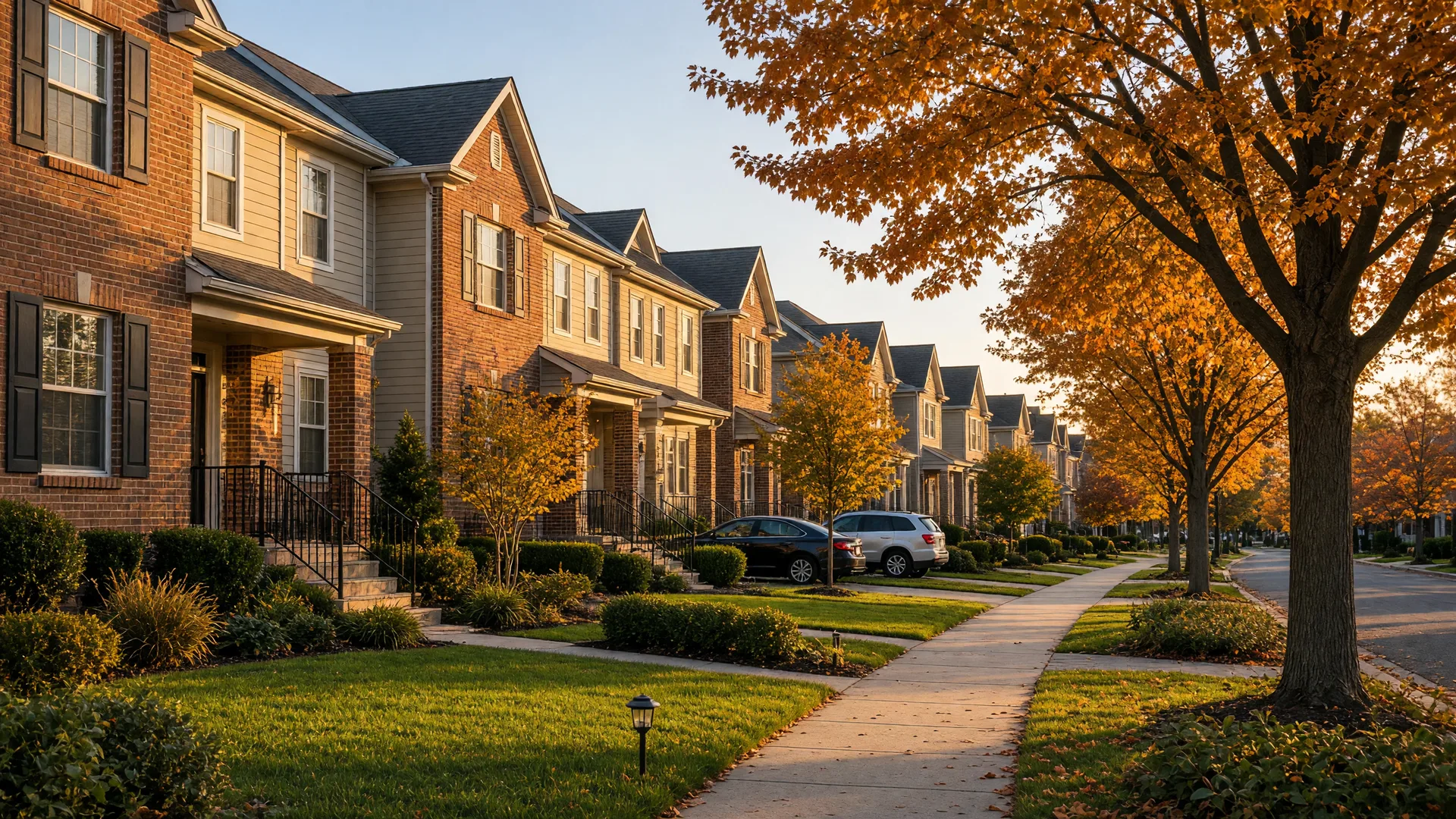
Some of the best value in Delran's housing market comes with a quarterly or monthly association fee attached, and that fee is neither a trap nor a bargain by itself. It is simply the price of shared ownership, and whether it is a good deal depends entirely on what it buys: lawn care, snow, exterior upkeep, community insurance, and the reserves that keep roofs and parking lots from becoming surprise bills. This guide is about reading that deal clearly, the documents to ask for, the numbers that matter, the rules that actually get enforced, and the questions to bring to your next townhouse visit. The Delran townhouse market guide has the inventory side, the housing options overview places townhomes among every other home type in town, and the Delran FAQ handles the quick ownership questions.
What Does an HOA Actually Do in Delran?
A homeowners association is the legal body that manages what a community shares. In a Delran townhouse development that typically means the buildings' exteriors, the common lawns and walkways, snow removal on shared drives, trash service, and the community's master insurance policy, plus the meetings, budgets, and rules that keep a hundred different owners pointed the same way. In exchange, owners pay an assessment, usually monthly or quarterly, and agree to a set of rules recorded in the association's documents.
The two words to get straight early are fee and assessment. The fee is the expected recurring cost in the budget. A special assessment is an extra, one-time charge for something the regular budget cannot cover, like a roof line or parking lot that failed early. Well-run communities plan for big items and fund special assessments rarely; cash-strapped ones defer, and the bill lands on owners later. That is why the association's finances are a due-diligence item, not a footnote.
The Documents to Read Before You Make an Offer
Every serious buyer of an association home should see the resale package, sometimes called the public offering statement, before signing. It usually contains the master deed or declaration (the community's constitution), the bylaws and rules, the current budget, the reserve study, the latest meeting minutes, and any pending special assessments. In New Jersey, buyers in many common-interest communities have statutory rights to these documents, thanks to the Condominium Act and the Planned Real Estate Development Full Disclosure Act, and your attorney should review the package during New Jersey's attorney review period just like any other contract document.
Read the minutes with the same attention as the budget; minutes are where actual drama shows up, the enforcement disputes, the special assessment vote, the parking complaints. A community with two quiet pages of minutes and a funded reserve is a very different home than one with angry letters in every meeting. The Delran buyer's guide covers the full purchase process, from the offer through the attorney review where document questions belong.
Fees and Reserves: What the Numbers Mean
Association fees in Delran townhouse communities typically land in the low hundreds per month and cover the list above, but the exact figure depends on the buildings, the amenities, and the age of the community. Compare total monthly cost, not the fee alone: association ownership usually trades away yard tools, roof replacement, and exterior painting, which single-family owners budget for separately. On a monthly ledger, a $250 fee that covers exterior care and insurance can beat a $0 fee attached to a house with a twenty-year-old roof and a deferred maintenance list.
The reserve study is the page that tells you whether the numbers are honest. It lists the big components, roof, siding, paving, decks, and how much the association is setting aside so they can be replaced on schedule. Ask whether the reserve is funded at the level the study recommends, and what happens when a component fails early. If the answer is "the board would levy a special assessment," you now know the true cost to plan for. The cost of living guide puts fees into the full monthly Delran budget, and the property taxes guide covers the tax side of the same ledger.
Rules, Pets, and the Art of Reading Them Honestly
Rules are where buyers get nervous, and where communities genuinely differ. The usual categories are parking, pets, exterior changes, rentals, and noise. Some Delran communities are dog-friendly with a dog park around the corner; others allow pets on a leash only, and a few restrict them altogether. Some let owners paint their front door; some do not. None of that is good or bad, it is just a match question, so read the rules the same way you read the floor plan, and weigh them against how you actually live.
If you are moving with a dog, confirm the pet policy in writing before the offer, because a no-pets rule is a dealbreaker that shows up eighteen pages into a boring document. The Pet Owner's Guide to Delran and the pet-friendly businesses roundup cover the rest of pet life in town, and the Delran FAQ answers the classic HOA questions neighbors actually ask.
Condo, Townhouse, or Single-Family in New Jersey
Legally, a condo and a townhouse are different ownership shapes even when they look alike from the street. In a townhouse association you usually own the building's interior and sometimes its exterior walls and roof, while a condo owner owns airspace, with everything structural owned in common. The practical difference shows up in what the association insures and what you insure. The Delran housing options page explains every home type side by side, the townhouse market guide details the current developments, and the new construction guide covers brand-new association communities still under builder control, where the governing documents and the reserve are both younger and worth an extra read.
55+ Communities and Association Living
Most of Delran's age-restricted and active-adult housing runs through an association, precisely because shared maintenance is the point: shoveling, mowing, and exterior care handled by the community, with amenities like clubhouses and grounds maintained from the same budget. The same document reading applies, with extra attention to amenity funding and any transfer fees. The senior living guide and the senior living blog guide walk the 55+ decision in detail, and the downsizing guide covers the equity and timing side of moving from a house to an association home.
The HOA question in Delran is rarely "should I buy into an association" but "does this specific association fit me." Read the resale package, weigh the fee against what it buys, check the reserve, match the rules to your life, and let the minutes tell you how the community actually runs. Then a townhouse in Tenby Chase, a condo near the Route 130 corridor, or an active-adult home at Ashley Crossing is just a smart purchase like any other. If you want help comparing communities, the neighborhoods guide introduces each area, the featured homes page shows what is listed right now, and I am always happy to walk buyers through the association paperwork that confuses everyone.
Frequently Asked Questions About HOAs in Delran
What do HOA fees in Delran townhouse communities typically cover?
Association fees usually cover shared expenses: common-area lawn care and snow removal, building exteriors, trash, the community's master insurance, and reserves for future repairs like roofs and parking lots. The exact list lives in the community budget, so read the current one before making an offer.
What documents should I read before buying a Delran townhouse?
Ask for the resale package or public offering statement: the master deed or declaration, bylaws, rules, current budget and reserve study, recent meeting minutes, and any pending special assessments. In New Jersey, buyers in many common-interest communities have rights to these documents, and your attorney should review them during attorney review.
What is a reserve fund and why does it matter?
The reserve fund pays for long-term repairs and replacements like roofs, siding, and paving. A funded reserve with a plan means fewer surprise special assessments; a chronically underfunded one means big costs can land on owners later. The reserve study is one of the most important pages in the package.
Are HOA rules a problem for Delran townhouse buyers?
Rules vary community to community: parking, pets, exterior changes, rentals, and quiet hours are the usual categories. Some Delran communities are pet-friendly and some are not, so match the rules to your own habits before you choose a development.
How do HOA costs fit the Delran budget picture?
Association fees are a monthly cost on top of mortgage, taxes, and utilities, usually in the low hundreds for Delran townhomes. They replace many single-family maintenance costs, so the fair comparison is total cost of ownership. The cost of living guide lays out the whole ledger.
Do 55+ Delran communities have HOAs?
Many age-restricted and active-adult communities run as associations because shared maintenance and amenities are what make them low-maintenance. The same document reading applies, with extra attention to amenity funding and transfer fees. The senior living guide explains what to ask before moving in.
Buying or Selling an Association Home in Delran?
Contact Bob Millaway at 856.426.1522. As an Epique Realty AI Certified Agent, I have walked hundreds of Burlington County buyers through HOA documents and helped owners sell association homes, and I am happy to read yours with you before you sign.